How to Choose Your First Grow Tent: A Complete Buyer’s Guide for SA Growers
 James Mokoena
Your grow tent is the foundation of your indoor setup. Everything else — your light, your ventilation, your yield — depends on getting this decision right. But with dozens of tent sizes and brands on the market, choosing can feel overwhelming. This guide walks you through every variable so you can buy with confidence.
Step 1: Choose the Right Size for Your Space
Tent size is the most important decision you will make. Too small and your plants will compete for light and airflow; too big and you will struggle to fill the canopy efficiently. The most important metric is floor area — this determines how many plants you can grow and what size light you need.
- 60×60cm (0.36m²): 1–2 plants, perfect for small spaces or a mother plant
- 80×80cm (0.64m²): 2–3 plants, a solid entry-level size
- 1.0×1.0m (1m²): 2–4 plants, popular choice for first-time growers
- 1.2×1.2m (1.44m²): 4–6 plants, best balance of space and manageability
- 1.5×1.5m (2.25m²): 6–9 plants, for growers who want serious yield
- 2.0×2.0m (4m²): 9–16 plants, experienced growers only
Our recommendation for first-time South African growers: start with a 1.0×1.0m or 1.2×1.2m tent. These sizes are large enough to get meaningful yields, but small enough to manage all variables without becoming overwhelmed.
Step 2: Height Matters More Than You Think
Standard tent heights range from 1.6m to 2.0m. Always choose at least 2.0m if you can — this gives you enough room for your light, a carbon filter, ducting, and plants that stretch. Remember: your light needs to hang 30–60cm above the canopy, your filter and fan take up another 30–40cm at the top. A 1.6m tent leaves almost no room to work.
Step 3: Fabric Density and Build Quality
Grow tents are rated by fabric density in grams per square metre (GSM). Budget tents use 400–500 GSM fabric; quality tents use 600 GSM or higher. Thicker fabric means better light-proofing, less odour bleed, better durability, and improved temperature stability.
- 400–500 GSM: Budget tier — functional but prone to light leaks over time
- 600 GSM: Standard quality — appropriate for most home growers
- 680–700 GSM: Premium — commercial-grade durability, near-zero light leak
Step 4: Reflective Interior
All quality grow tents use mylar lining on the interior. Look for 95%+ reflectivity ratings. This bounces light back onto your plants from every angle, effectively multiplying your light output and evening out the coverage across your canopy. Avoid tents with dimpled rather than flat reflective lining — flat mylar performs significantly better.
Step 5: Zips and Light Leaks
Zips are where cheap tents fail. Poor-quality plastic zips develop light leaks within weeks, and once your plants are in flower, even small light leaks during the dark period can cause stress and hermaphroditism. Look for double-stitched zips with no-light-leak flaps, and test all zip paths before installing your grow.
South African Considerations
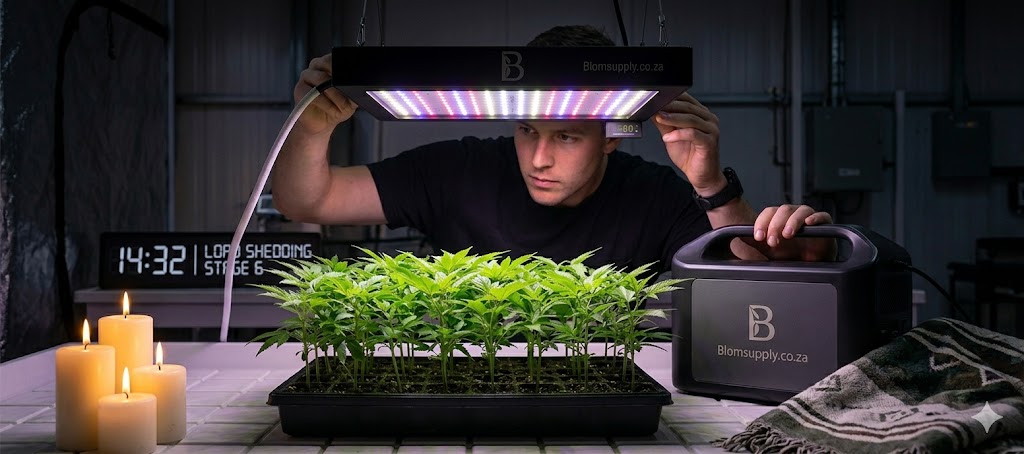
South African growers face two unique challenges: dust and load shedding. High-dust environments like the Highveld and Karoo require more frequent filter changes — factor this into your ventilation budget. For load shedding: plan your light cycle around your area’s scheduled outages. A consistent 12/12 cycle during flowering is critical, so know your Eskom schedule and adjust accordingly.
"Don’t cheap out on the tent. You can always upgrade your light later, but fighting light leaks mid-flower is a nightmare you don’t want."
— BlomSupply customer, Pretoria
Ready to choose? Browse our full range of quality grow tents, all selected for the South African climate. Our team is available on WhatsApp to help you pick the perfect size for your space.